
Your cart is currently empty!
Merino fleece vs. Teddy: How do these materials differ, and which one should you choose?
Merino fleece vs. Teddy: What are the differences between these materials?
You see a fluffy merino wool jacket and think: fleece?
That’s a very common association. We often colloquially refer to many fluffy, shearling-like materials as "fleece," even though they may have completely different structures and behave differently when worn.
At Basic Wool, we offer both Polar Merinoand Teddy. Both materials are based on merino wool and are warm and fluffy, but that’s pretty much where the similarities end.
You’ll notice the biggest difference the moment you touch them.
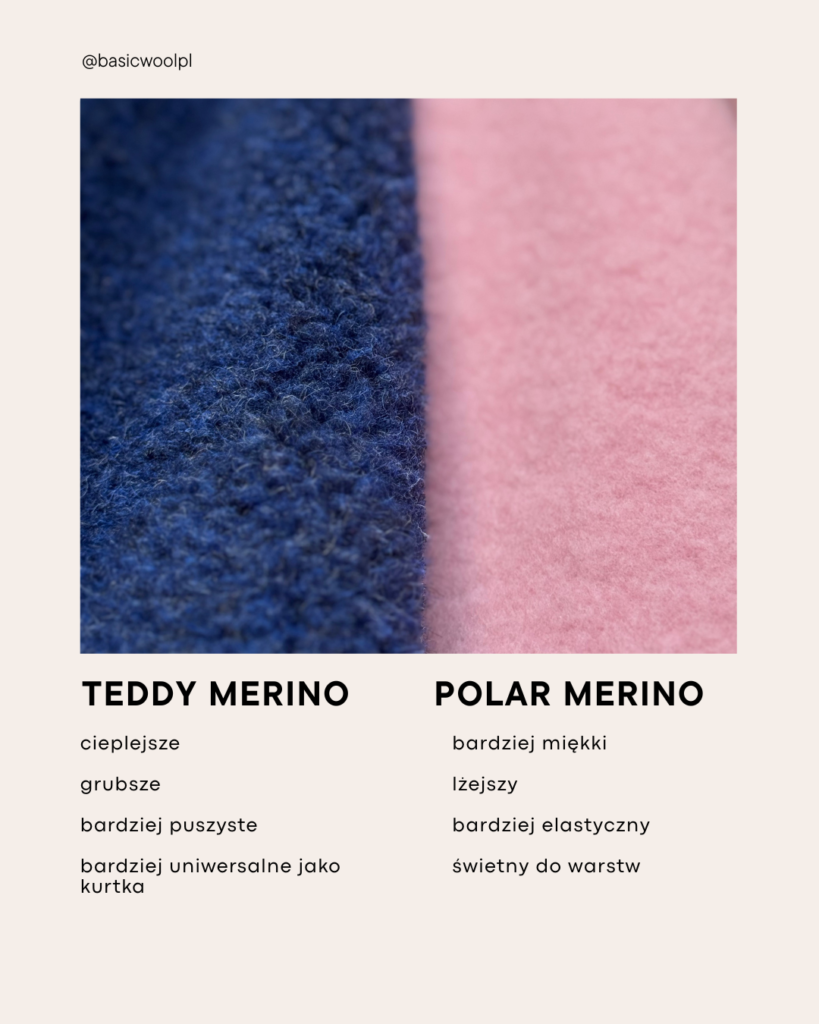
Merino fleece—the truly soft one
Merino fleece is lightweight, stretchy, and feels great against the skin. It has a delicate, soft surface and offers a completely different feel compared to the chunky texture of Teddy fabric.
This is the kind of material many people picture when they think of soft merino clothing, including garments made for children.
But fleece doesn't have to be made of polyester.
That’s the common perception because most popular outdoor fleeces are indeed made from synthetic fibers. Classic synthetic fleece is a knit fabric with a specially finished surface designed to create a soft, fluffy structure that traps air and heat.
However, a similar type of fabric can also be created using wool.
And that’s where the natural properties of merino come into play.

What are the benefits of a merino wool fleece?
Merino wool naturally helps regulate body temperature, manages moisture, and minimizes odor buildup. Its ultra-fine fibers are also exceptionally soft against the skin.
This makes a merino fleece an excellent choice for a base layer worn close to the body.
You can wear it on its own on a cooler day, under a winter jacket, or even under a Teddy jacket when the temperature really drops.
It is a material that provides warmth without the heaviness typical of a thick jacket.
And what is Teddy?
Teddy takes a completely different approach.
It is a thicker, more voluminous material with a distinctive, fleecy "teddy bear" texture. It has more substance, a bolder look, and definitely feels more like a jacket.
That is precisely why our Teddy jackets are among our best-performing products for the colder months.
Teddy provides plenty of warmth and serves as a substantial outer layer.
However, there is one characteristic worth knowing before you buy.
It isn't as soft or delicate to the touch as the Merino Fleece.
So, if you look at the fluffy texture of the Teddy and imagine the softness of a standard children's fleece, you might be surprised.
That doesn't mean there is anything wrong with the material.
It simply serves a different purpose.
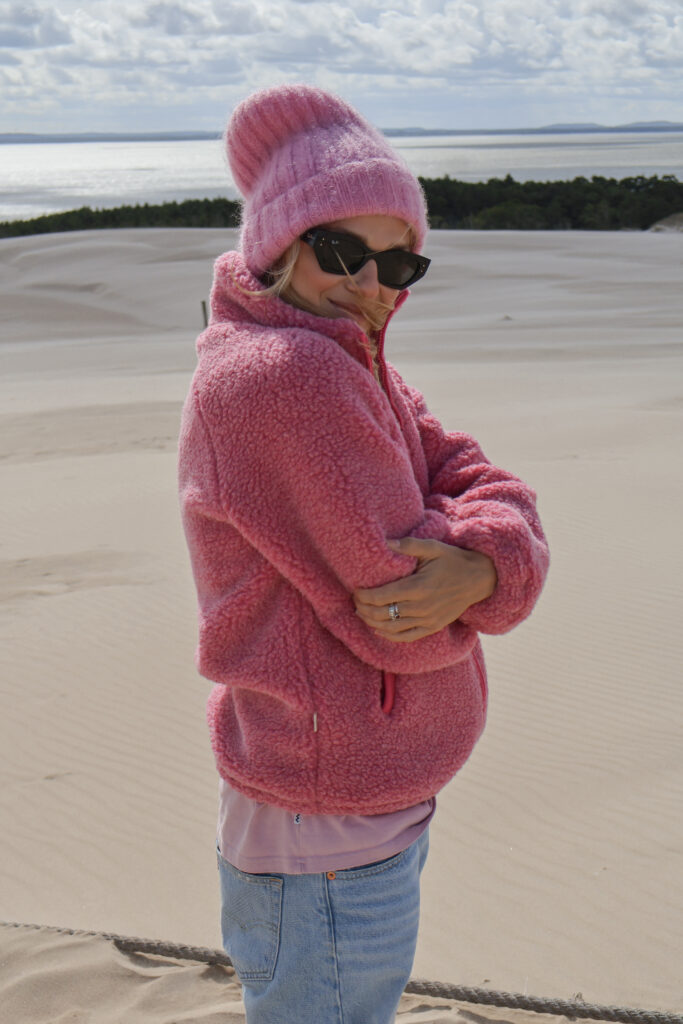
Teddy or Merino Fleece?
The simplest way to put it is this.
Polar Merino Choose this if you prioritize softness, lightness, flexibility, and the ability to layer.
Teddy Choose this if you are looking for a thicker, warmer jacket that can serve as a standalone outer layer in autumn and winter.
And in really low temperatures, you don't have to choose at all.
A Merino fleece worn under a Teddy fleece makes a great combination.
A soft layer close to the body and a thicker, more insulating layer on the outside.
Merino fleece vs. polyester fleece
It is also worth addressing a common misconception here.
The word "fleece" does not automatically mean polyester.
Polyester is simply the most commonly used fiber for making classic synthetic fleeces.
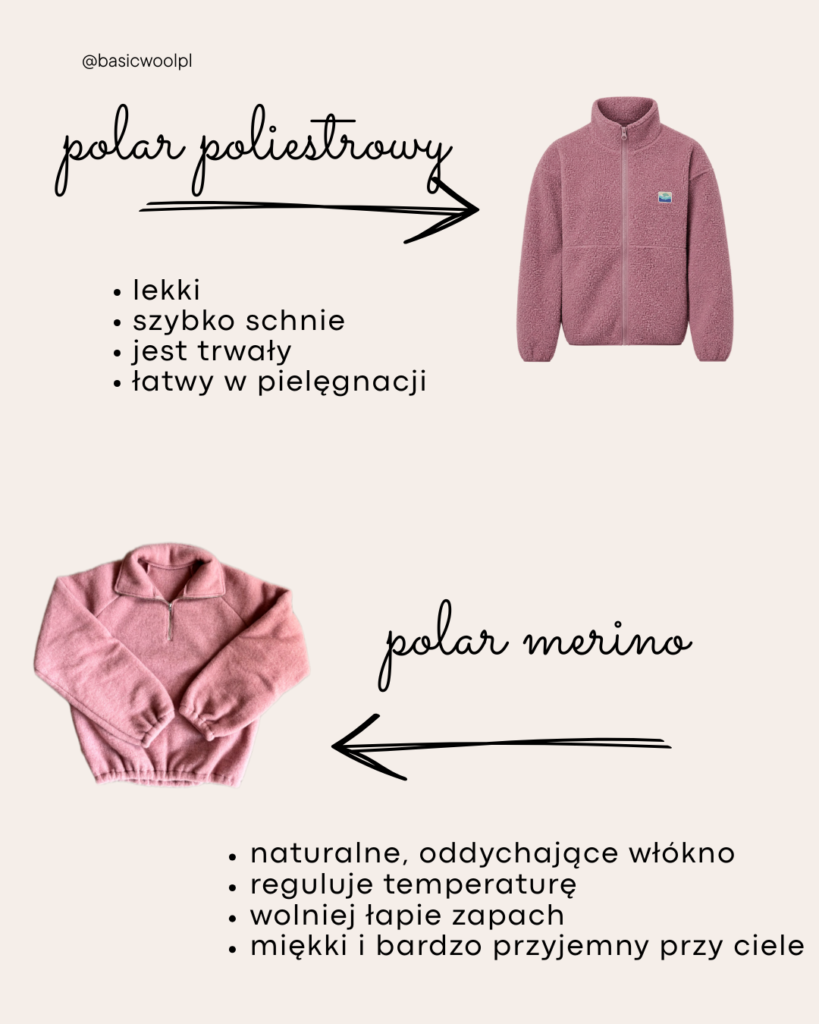
Such a fleece has many advantages: it is lightweight, quick-drying, durable, and relatively easy to care for.
A Merino fleece, on the other hand, utilizes the natural properties of wool.
Merino helps manage moisture, regulate temperature, and minimize odors. It is also a natural, renewable, and biodegradable fiber.
So, it is not a question of one fleece being "real" and the other not.
They are similar types of material made from completely different fibers.
And that is precisely why the feel when wearing them is different, too.
Why are Teddy fleece and Merino fleece so often confused?
Because in photos, both materials can look fluffy.
Furthermore, both are associated with warmth and merino wool.
The problem arises when we assume, based solely on appearance, that they will also feel identical to the touch.
They won’t.
Merino fleece is softer and more delicate.
Teddy is thicker, more textured, and designed primarily as a warm outer layer.
One raw material, two completely different fabrics.
This demonstrates just how much the fabric's construction affects the finished garment.
Merino wool can become a lightweight, soft fleece.
It can also take on the thick, fluffy texture of Teddy.
That’s why, when choosing a garment, it’s worth looking beyond just the material composition.
What also matters is the type of fabric, its weight, its texture, and its intended use..
And if you’re torn between our Merino fleece and the Teddy jacket, the simplest question is:
do you want softness and layering capabilities, or a warm jacket for the colder months?
The answer usually points you straight to the right choice.
Leave a Reply